

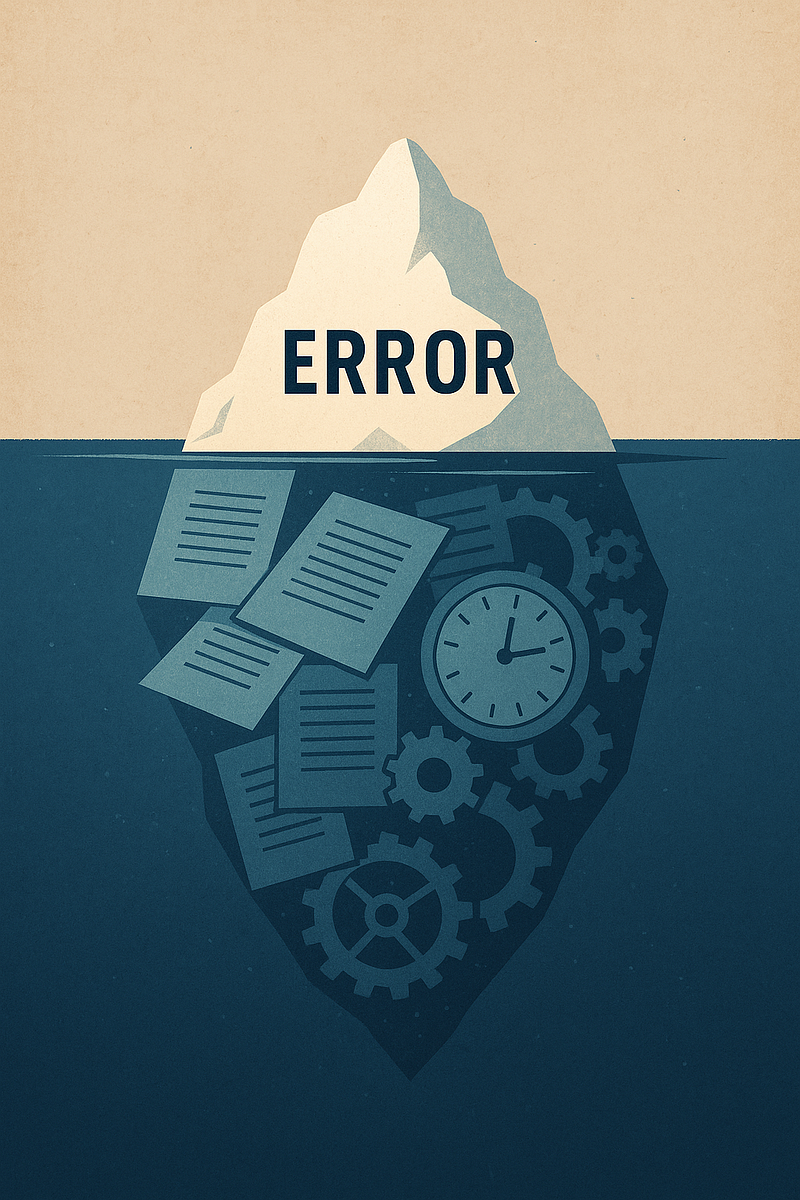
In any craft where rigor is a non-negotiable principle, a mistake carries a disproportionate weight that etches itself into memory.
It doesn’t matter how many hours are spent verifying, cross-checking, or fine-tuning. One minimal lapse is enough to render all that effort invisible.
Work done well is, by nature, imperceptible. When everything goes as it should, people simply receive the result and move on.
There’s no applause for what was prevented. But if an error slips through, it takes up all the space and becomes the only reference point.
And it hurts — not only because of what happened, but because of the feeling that being meticulous and responsible is never enough. Unfair, yes, but inevitable.
Rigor doesn’t guarantee infallibility. It lowers the chances of failure, yes, but it doesn’t eliminate them.
When the mistake finally happens, the only thing left is to acknowledge it, correct it, and learn from it.
There’s no magic formula. What exists is the decision to keep the same commitment even after failing. To keep guarding every line and every figure as if they were the ultimate measure of our reputation.
Because, although people only see the mistakes, we know what went on behind the scenes to try to prevent them.
This piece was originally published in Spanish. You can read the original version here.