


The news spread with unusual speed: on July 22, Earth completed its rotation 1.34 milliseconds faster than average. Some outlets ran headlines like “The second shortest day ever recorded”1, while others used phrases such as “Our planet is spinning faster than normal”2 or “Earth’s rotation is accelerating”3.
Although a few reports offered well-founded explanations for a phenomenon that is imperceptible, the overall tone leaned toward exaggeration.
But what does it actually mean that Earth rotated faster?
Did our calendars get shorter?
Did our clocks tick faster?
Did we have less time to make decisions?
No. Nothing in our daily lives changed.
To put it in perspective: a voluntary blink lasts, on average, more than 570 milliseconds, according to studies using high-speed cameras4. On July 22, Earth fell short of a full 24-hour day by 1.34 milliseconds5. That’s a difference about four hundred times smaller than the duration of a blink.
Yes, the day was technically shorter. That’s determined by atomic clocks, which measure with precision how long Earth takes to complete a rotation.
But turning that fact into a breaking-news alert — without context or scale — is to nudge readers toward a distorted conclusion, as if something important had shifted. It hadn’t.
Even if Earth’s rotational acceleration continued and we had to subtract one second from the global timekeeping system — a step that has never been taken — the effect on daily life would be zero6.
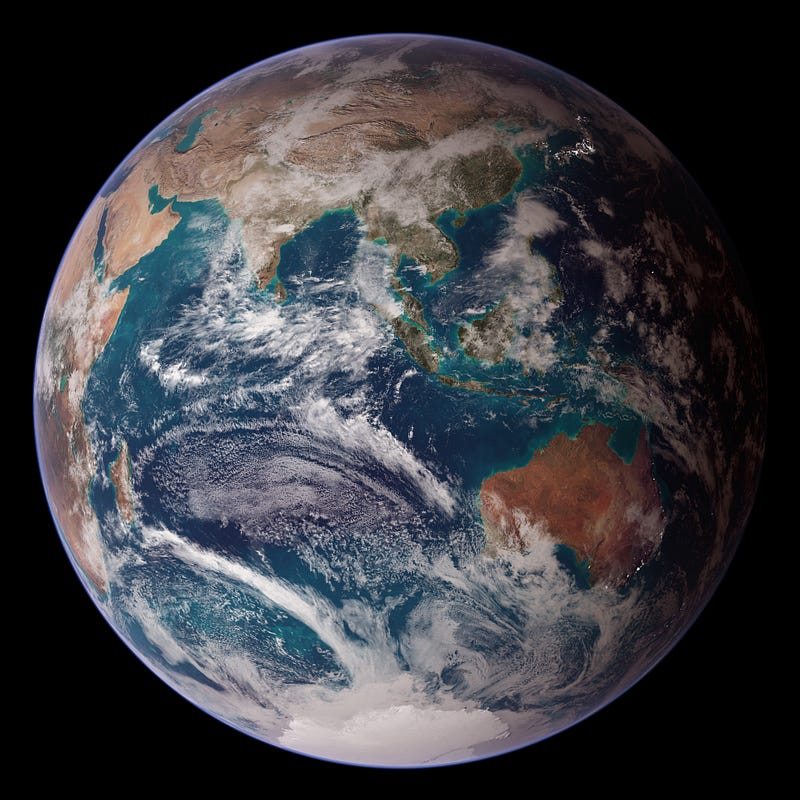
For decades, it has been known that the length of a day varies slightly, because Earth’s rotation is not constant. Some days are a bit longer, others a bit shorter, depending on factors like the Moon’s gravitational pull and other celestial influences, which cause subtle deformations in the planet’s shape.
This variability has always been there.
There’s no catastrophe.
Not even a novelty7.
Reporting is not just repeating a fact. It’s explaining it, framing it, placing it in context.
Otherwise, we risk trading knowledge for spectacle.
Technical findings should not be translated into fear, nor scientific ones into click traps.
Especially when what’s being reported is imperceptible to any human being.
The fact that Earth rotated 1.34 milliseconds faster8 is, at most, a scientific curiosity.
What truly matters is asking why we chose to amplify it irresponsibly —
as if the planet were on the verge of breaking away from its gravitational balance.
This piece was originally published in Spanish. You can read the original version here.
If this piece gave you something to think about, feel free to buy me a coffee.
References
¹ El 22 de julio será el segundo día más corto jamás registrado — Infobae ↩
² El 22 de julio de 2025 no ha sido un día normal. Ha sido uno de los días más cortos en toda la historia de la Tierra — Xataca ↩
³ La rotación terrestre se acelera: nuevo récord el 22 de julio — Gizmodo ↩
⁴ High-speed camera characterization of voluntary eye blinking kinematics — National Library of Medicine ↩
⁵ ⁷ A Day Is Not Exactly 24 Hours — Time and Date ↩ ↩
⁶ What Is a Negative Leap Second? — Time and Date ↩
⁸ Earth Will Spin Unusually Quickly in July and August — Time and Date ↩